
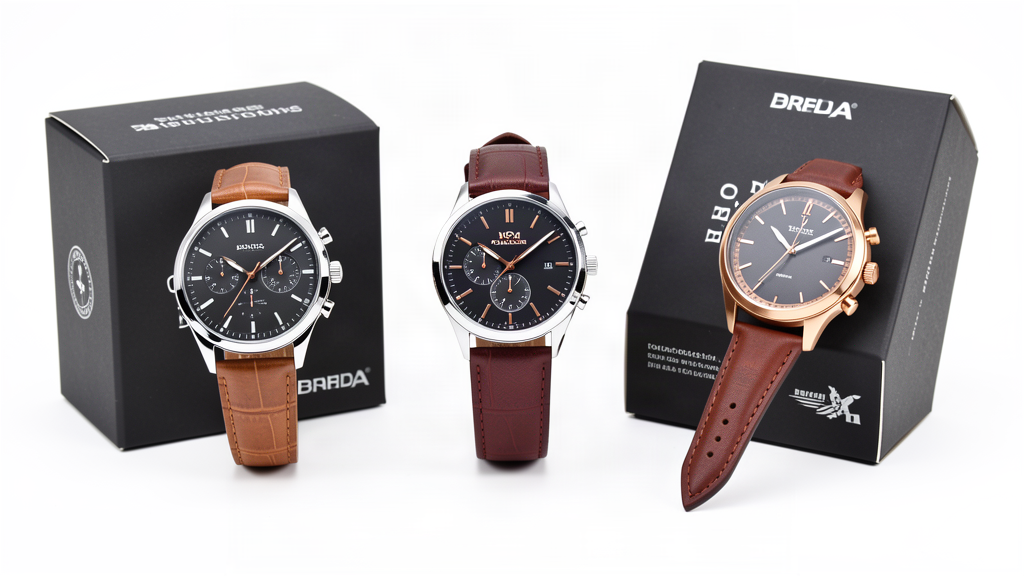
The question wasn’t whether to add a watch. It was whether a watch could actually feel like it came from them.
In our experience helping lifestyle brands add watches to their product lines, the most natural extensions are the ones where the watch inherits the brand’s existing material choices and visual language rather than introducing new design elements. A first collection typically starts at 50-100 pieces, with quartz models at $15-25 per unit and sampling fees of $100-300 per style.
Several well-known lifestyle brands have shown what it looks like when a company builds a watch identity that customers accept as entirely their own. What they have in common is not a particular aesthetic — they look and feel quite different from each other — but a shared decision early on: to develop watches as a genuine product category, with the same design rigour applied to everything else, rather than as an accessory line added onto an existing range.
The brand in this case came to us at a similar point. They had built a clear identity across jewellery, apparel, and leather goods. They knew watches belonged in their range. What they needed was a development process that would get them there without producing something that looked like it came from somewhere else.
The Starting Point: A Brand That Already Knew What It Was
This was not a brand searching for direction. They had a clear aesthetic language, a defined customer, and a product range that had earned genuine loyalty. The commercial case for adding watches was straightforward — watches are a daily-wear category, they carry strong gifting appeal, and they sit comfortably in the price band where this brand already operated.
What wasn’t straightforward was execution. Every brand that considers adding watches to their product line runs into the same reality: watches are made differently, through different supply chains, by different kinds of partners. The risk isn’t that the watch fails commercially — it’s that it arrives looking like it was sourced from somewhere else, carrying someone else’s sensibility rather than the brand’s own.
Watches are one of the most logical category extensions for an established lifestyle brand because they are worn every day, purchased with intention, and kept for years. Unlike seasonal apparel, a watch purchased from a brand a customer trusts becomes a permanent part of how they present themselves. For brands that have built loyalty through objects — jewellery, leather goods, homeware, accessories — watches extend that relationship into a new category without requiring the customer to think differently about who the brand is. The category earns its place when the watch looks and feels like it was always going to exist in the range.
The Design Brief: Everything That Makes This Brand Recognisable, Applied to a New Object
The brief this brand gave us was not a list of specifications. It was a description of how their objects felt in hand — the material choices they gravitated toward, the proportions they found considered rather than showy, the way they thought about finishing detail.
Translating that into a watch development brief was the first piece of work: what does restraint look like on a dial, which case shape carries the brand’s sense of proportion, does the brand’s instinct toward natural materials extend to the strap, and if so, which leather finish maintains that sensibility at a watch price point?
These questions don’t have obvious answers, and they can’t be resolved by looking at reference images alone. They require a back-and-forth between the brand’s design instinct and the technical realities of how watches are made. Some choices that look right on paper behave differently in development — a dial texture that reads as refined in a render can flatten under certain finishing processes, and a case proportion that looks balanced in a sketch may feel heavier than expected once the weight of the movement is inside it.
The answer is involvement — sustained, detailed involvement throughout the development process, not just at the brief and the final approval. The brands that produce watches that genuinely feel like their own are the ones whose design team engages at every sample stage: reviewing the first prototype in person rather than by photograph, making considered decisions about finishing and proportion rather than accepting the closest available option. In most cases, one to two sample rounds are sufficient to reach a result the brand is confident in — but only when the feedback at each round is specific and informed. A watch that feels like it belongs to a brand is almost always the product of clear, detailed direction, not a single sign-off at the end.
For a closer look at how the sample rounds work in practice, [INTERNAL LINK: The sample stage explained] covers what to expect between the initial brief and the first approved prototype.
What the Development Process Actually Looked Like
Lifestyle brands typically move from approved design to delivery in about 6 months, with the largest share of time spent on sampling and revision rather than development itself.
The brand came to the first conversation with strong aesthetic references but limited technical knowledge of watchmaking. This is the most common starting position we work with — across more than 45 brand partnerships since 2009, brands that arrive with a clear visual identity and an open mind about how to execute it technically tend to make better development decisions than those who arrive with a fixed specification assembled from online research.
The first prototype round established the design direction — case shape, dial proportion, strap material and finish — and revealed the first round of adjustments: the dial surface needed a different treatment to carry the brand’s signature quietness, and the lug width required refinement to achieve the proportion that felt right on the wrist rather than on paper.
The second round resolved those decisions and introduced a new one: packaging. For this brand, the packaging was not an afterthought — the weight of the box, the texture of the material, the way the watch sits when the lid is opened all mattered as much as the object itself. Getting that right added time to the development process. It was time well spent. By the second prototype, the brand’s creative director looked at the sample and said something that rarely happens in product development this early: “This looks like us.”
For an established brand with a clear aesthetic direction, the realistic timeline from first brief to finished product is two to three months. Most of that time is concentrated in the design confirmation and sample stage rather than in development itself. Brands that invest in thorough, specific sample feedback typically reach a satisfactory result within one to two rounds. The brands that take longer are usually the ones who discover mid-development that their brief was less specific than they thought, and need additional rounds to land on a direction they are confident in.
For more detail on the full journey from first conversation to delivery, How watch collection development works — from first conversation to first delivery covers each stage in sequence.
The Outcome: A Category That Didn’t Feel Like an Addition
The collection launched with three references — two core models and a limited run — positioned and priced consistently with the brand’s existing accessories range. The response confirmed what the brand had hoped for: customers didn’t treat the watches as a departure. They treated them as an obvious next thing to own from a brand they already trusted.
The brand’s retail team noted that the watches brought in customers who had not previously purchased from them — people drawn in by the watch who then explored the wider range. A new category had opened a new entry point into the brand.
The collection is now in its second development cycle, with a more specific brief built on what the brand learned the first time. This pattern — a first collection that establishes the direction, a second that refines it — is one of the most common trajectories we see. Several of the brands we have worked with since 2009 have grown the category considerably once it proved itself with their customers, and the category tends to keep growing with the brand.
If you have a brand with a clear point of view and you have been thinking about whether watches belong in your range, the starting point is usually a conversation about what your brand already is, not a specification sheet. The brand owner’s guide to adding a watch line to your product range is a useful place to think through the category before that first conversation. When you’re ready to talk, we’re here.
Sources: Brand extension concept reference; Federation of the Swiss Watch Industry industry data.