
A watch that has your logo on the dial is not the same as a watch that feels like your brand.
In our experience helping brands build their identity into watch collections, the strongest results come when the dial, case back, and packaging are all briefed as surfaces for brand identity — not as generic elements with a logo applied.
The difference is the thing that matters most — and it is the thing that most discussions about branded watches never address. A logo on a dial tells the person looking at it whose watch it is. A watch that genuinely carries a brand’s identity tells them something about the brand itself: its values, its sense of quality, the world it inhabits.
For a sports team, that means a supporter picks up the watch and feels something about the club — not just sees a badge. For an IP or film brand, it means a fan recognises the property’s atmosphere before they read a single word on the dial.
Getting there requires thinking about the watch as a complete object, not as a surface to apply branding to. Every element — the dial, the case, the strap, the packaging — communicates something. When those elements are aligned, the watch carries the brand. When they are not, it carries a logo.
Start With What Your Brand Already Feels Like
Before any design decision is made, the most useful exercise is to gather the objects that best represent the brand at its strongest — existing products, references, the things that the brand’s most loyal audience already owns and connects with.
For a sports team, this might be the away kit from a particularly significant season, the scarf that has been produced for thirty years, the colours that appear in the stadium’s architecture. For a film or character IP, it is the visual language of the property itself — the palette, the atmosphere, the emotional register of the world the IP inhabits.
These references contain the brand’s identity in a form that can be translated into watch design. Not reproduced — translated. A watch is a different kind of object from a kit or a poster, and it has its own formal language of proportion, material, and finishing. The translation is the work of finding where the brand’s visual language and the watch’s design vocabulary overlap.
The brands that produce watches their audience immediately recognises as theirs are the ones that did this translation work thoroughly before the first design proposal was made. The brands that produce watches that look like branded merchandise are the ones that skipped it.
How do you translate an existing brand’s identity into a watch design brief?
Translating an existing brand identity into a watch design brief starts with gathering the objects and references that best express the brand at its strongest — then identifying the visual properties those objects share: their colour relationships, their proportional instincts, their material quality signals, and their register (reserved or expressive, minimal or detailed, classical or contemporary). Those shared properties become the filter for every design decision in the watch development. If a proposed dial colour does not sit within the brand’s established colour architecture, it does not belong in the collection. If a case proportion feels heavier than the brand’s typical aesthetic, it needs adjustment. The brief is not a technical document — it is a description of what the brand feels like, specific enough to guide decisions at every stage of development.
The Dial — More Than a Surface for the Logo
The dial is the single most recognised surface of a watch: from a distance of an arm, it is the part people read first, which is why leading brands protect their dial designs as signature elements.
The dial is the face of the watch. It is what the wearer and the people around them see most of the time. For a branded watch collection, the dial carries more of the brand’s identity than any other single element — and not primarily through the logo.
Colour is the most immediate brand signal on a dial. A team’s primary colour, applied through the right finishing process and calibrated under natural light, communicates the brand’s affiliation before the eye has read anything else. For film and character IP, the specific colour palette associated with the property — even without any character imagery — can carry the emotional register of the franchise.
Surface texture communicates quality and positioning. A matte dial reads differently from a glossy one; a textured surface reads differently from a smooth one. The texture should be chosen to match the brand’s existing quality signals — if the brand’s other products have a matte, refined finish, the dial should carry the same instinct.
Proportion and layout determine whether the dial feels considered or crowded. A dial with too many elements — logo, indices, text, date window — loses the sense of intention that makes a watch feel premium. The brands that produce the strongest dials are the ones that were willing to leave space, to let the colour and proportion do the work, and to reserve the explicit brand reference for a position where it has impact rather than noise.
The logo’s position matters as much as its presence. A logo placed prominently at twelve o’clock makes an immediate statement but leaves less room for the dial to function as a design object in its own right. A logo at six, or a crest on the caseback, makes the affiliation deliberate rather than declared — and often produces a watch that works for a wider range of wearers while still being unmistakably connected to the brand.
Where should a brand’s logo or crest appear on a watch to have the most impact?
The position of a logo or crest on a watch determines whether the watch reads as branded merchandise or as a considered object that belongs to a brand. A crest at twelve o’clock is immediately visible and unambiguous — it works for a watch intended primarily as a fan statement piece. A crest at six o’clock or on the caseback is more deliberate — the owner and those close to them know it is there, but the watch presents to the wider world as a quality accessory. For collections that need to work across a range of contexts and wearers, the caseback is often the strongest position for the explicit brand reference, with the dial carrying the brand’s identity through colour, texture, and proportion rather than through the logo itself.
The Strap — The Largest Surface on the Watch
The strap accounts for more of the watch’s visible surface than almost any other element, and it is often the last thing a brand thinks about seriously.
For a sports team or IP brand, the strap is an opportunity that is frequently underused. The team’s secondary colour as a stitching detail. The club’s signature colour in the leather itself. A texture that references the material language of the brand’s other products. These details are not large — but they are the details that a supporter or fan notices when they look closely, and they are the details that distinguish a watch that was thoughtfully designed from one that was assembled from available options.
The strap also determines how the watch feels in daily wear — more than the case, more than the movement. A strap that is too stiff, too thick, or too casual for the watch it is paired with undermines the quality signal of everything above it. The strap specification should be chosen in relationship to the dial and case, not as a separate decision made at the end of the process.
The Case — Proportion, Finish, and What It Says About the Brand
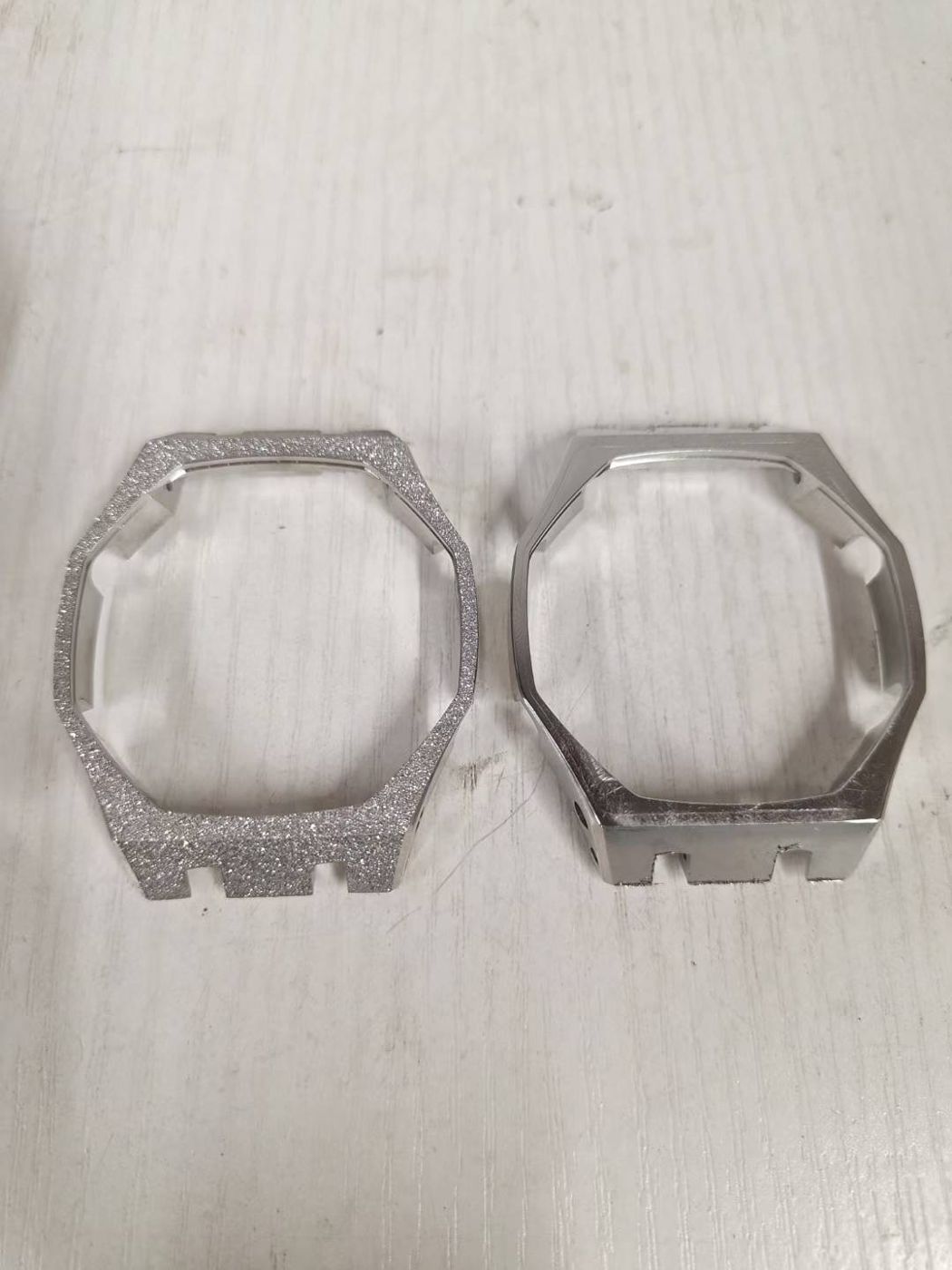
The case shape and finishing determine the watch’s personality in the same way that a suit’s cut determines the personality of a garment. A round case reads as classical; a cushion case reads as contemporary; a tonneau case reads as distinctive. The finishing — polished versus brushed, sharp edges versus soft — communicates the brand’s relationship to tradition and precision.
For most sports team and IP brand collections, the case does not need to do anything unusual. Its job is to support the dial and carry the brand’s quality signal at the right price point. The decisions that matter are whether the proportions feel right for the brand’s aesthetic — not too sporty, not too formal, not too large or too small for the intended wearer — and whether the finishing level matches what the brand has established in other product categories.
A case that reads as slightly too cheap undermines the entire collection. A case that reads as slightly too premium relative to the brand’s positioning creates a different kind of disconnect. Getting the case right is about calibration — and calibration starts with the brand’s existing products, not with what is technically available.
Packaging — The First Thing the Owner Experiences
The packaging is the first physical encounter the owner has with the watch. Before the case is opened, the packaging has already communicated whether this is a considered object or a promotional item.
For sports teams and IP brands, packaging is where the brand’s identity can be expressed most completely — colour, material, typography, the weight of the box, the way the watch is presented when the lid is lifted. A packaging specification that matches the brand’s other product packaging, adapted for the watch category, tells the owner that the watch was made with the same intention as everything else the brand produces.
Packaging decisions should be made in parallel with the watch development, not at the end of it. A packaging direction that is determined after the watch is approved — often under time pressure — rarely reaches the standard the watch itself deserves.
The Test: Would Your Audience Recognise It Without Reading the Logo?
This is the clearest measure of whether a branded watch collection has done its work. Show the watch to someone who knows the brand well — a long-standing supporter, a dedicated fan of the IP — without telling them whose it is. If their first response is recognition — “that looks like it could be ours” — the design has carried the brand’s identity through its visual and material language. If their first response is confusion until they read the logo, the design has not done its work.
The goal is a watch that communicates the brand through every element simultaneously. The logo is confirmation, not the primary message.
To see how this approach worked in practice for a sports team project, how a sports team launched its first official watch collection gives a concrete account of how the brand identity was built into the collection. For an IP collaboration example, how a film brand brought collectible timepieces to market shows how a film franchise’s visual language was translated into a watch design that fans recognised immediately.
For the broader picture of how licensed and IP watch collections are developed, how brands and IP holders bring licensed watch collections to market covers the complete process.
If you are thinking about what it would take to build your brand’s identity properly into a watch collection — not just put your logo on one — that is a conversation worth having early in the process. We’re here.
Frequently Asked Questions
Related reading: Building a Watch Collection That Belongs to Your B · Adding Watches to Your Brand: How a Lifestyle Bran · Custom Watches for Jewelry Brands: Adding Timepiec.
Start with the elements customers already recognise: your brand’s colours, materials, proportions, and finishing language. Apply those to the dial, strap, case and packaging so the watch reads as unmistakably yours even before the logo is seen.
The dial is the most recognised surface — it is what people read at arm’s length. But the strap is the largest visible surface, and the case’s proportion and finish carry the tactile brand feel. All three need to work together.
Very. Packaging is the first thing an owner touches, and it sets expectations for the product inside. Brands that treat packaging as part of the collection — not an afterthought — reinforce the same identity signals as the watch itself.
Ready to explore what a watch line could look like for your brand? Start a conversation — we’ll be straightforward about fit and next steps.
Sources: Brand extension concept reference; Federation of the Swiss Watch Industry industry data.
Related: Co-branded watches between two brands · Planning a numbered limited edition