
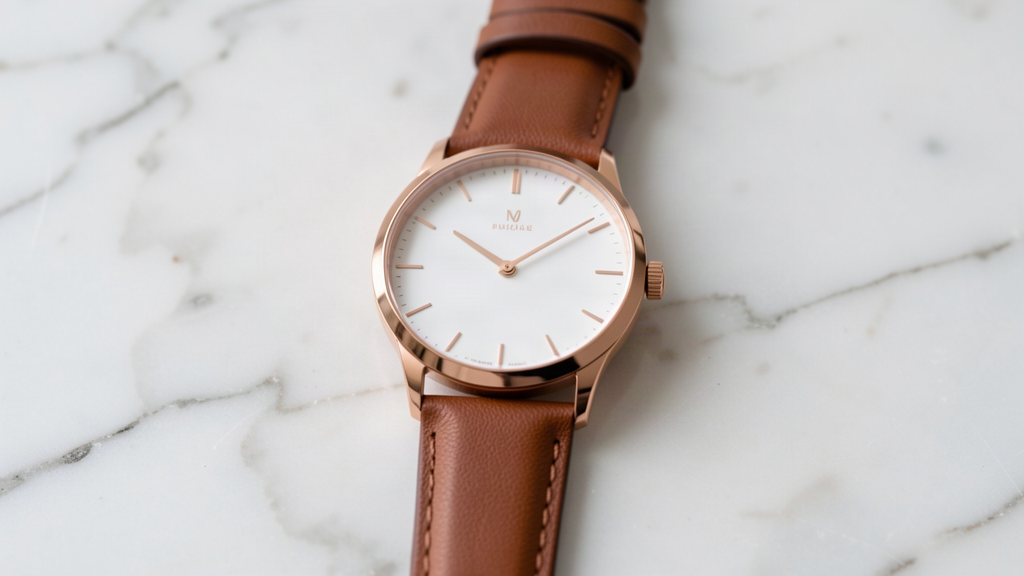
A strategic guide for established lifestyle brands considering their next product category.
Expanding into a new product category is one of the more consequential decisions an established brand can make. Done well, it deepens customer relationships and opens a new line of long-term growth. Done poorly, it dilutes what made the brand distinctive and turns a promising idea into an expensive distraction. The challenge is rarely whether a business can produce a new product — almost any brand can find a manufacturer for almost anything. The real question is whether customers will believe that product genuinely belongs to the brand, and whether the brand’s team is prepared to make the decisions that determine the answer.
That question matters more with watches than with most other categories. A watch isn’t purchased out of simple need. It’s worn daily, noticed up close, gifted for meaningful occasions, and often kept for years — which means it says something about the brand every single day it’s worn, in a way that a seasonal accessory rarely does.
Why the Watch Category Rewards — and Punishes — Brand Consistency
Some brands introduce a watch collection and the reaction feels almost inevitable: customers are surprised the brand hadn’t done it sooner. Other brands launch watches that are well made and competitively specified, yet something about them feels disconnected. Customers sense the watch was added because it seemed commercially attractive, not because it belonged in the brand’s world — and once that sense sets in, no amount of technical quality fully corrects it.
The difference has very little to do with manufacturing quality and everything to do with brand consistency. Over the years, we’ve worked alongside lifestyle brands, fashion labels, jewellery companies, licensed brands, sports organisations, and established retailers exploring the watch category. Every project starts with different objectives, but the pattern repeats: the brands that build successful watch collections don’t start by asking “how do we manufacture a watch?” They start by asking “does a watch deserve a place in our brand?” That question changes every decision that follows — product design, pricing, packaging, retail presentation, and how customers ultimately respond.
It also changes how the development process itself unfolds. Brands that arrive with clarity about their own identity tend to move through design and sampling efficiently, because most decisions have an obvious answer once the brand’s own logic is applied. Brands that skip this step often find themselves relitigating the same questions during sampling that should have been settled before development began.
Should every established brand consider adding a watch collection?
Not every brand should, and that’s a legitimate answer, not a failure of ambition. The right test isn’t whether a brand could sell a watch — almost any brand could. It’s whether customers would believe a watch genuinely belongs alongside everything else the brand already makes. Brands with a clear, consistent identity and genuine customer trust tend to pass this test easily. Brands still finding their identity, or relying on novelty rather than loyalty to drive sales, are usually better served waiting until that foundation is in place, since a rushed watch launch tends to expose exactly the inconsistency it was meant to paper over.
A Watch Collection Is Never Just Another Product
Every product extension carries the same risk of misreading the situation: the brand believes it’s adding another product, while customers experience something different. They aren’t evaluating the watch by itself — they’re evaluating what the watch says about the brand that made it. A café that starts roasting its own coffee feels like a natural next step. The same café launching a line of office furniture prompts an immediate “why?” — not because the furniture is badly made, but because there’s no connection to explain its existence.
This is one of the most overlooked aspects of brand extension: customers rarely judge a new category on quality alone. They judge whether it feels consistent with everything the brand has already taught them to expect. Watches occupy a particular position in this judgment because, unlike seasonal products bought occasionally, a watch becomes part of everyday life — worn to meetings, on travel, at celebrations, through ordinary days that add up to years. For many customers, it becomes one of the few physical objects they interact with almost daily.
That makes a watch collection both an opportunity and a responsibility. If the watch reflects the brand’s established design language and customer expectations, it strengthens a connection that already exists. If it feels disconnected, even subtly, it can raise doubts about the brand’s consistency more broadly — doubts that extend beyond the watch itself into how customers view the rest of the range. Successful watch collections are rarely remembered for their technical specifications alone. Customers remember how naturally the product fit, which is why the development process should begin with the brand’s own identity rather than with movements, case materials, or production methods.
Why Watches Are One of the Most Natural Brand Extensions
The watch category is substantial and still growing: the global luxury watch market was valued at USD 57.8 billion in 2025, and Swiss watch exports alone reached CHF 25.6 billion — the second-highest year on record. (Fortune Business Insights / Federation of the Swiss Watch Industry) Brands that enter this category are joining a proven, mature market — not an experiment.
Not every product category suits every brand equally. Some extensions ask customers to rethink what a business stands for; others build directly on trust that already exists. Watches sit firmly in the second group. For established lifestyle brands, they represent one of the more logical categories to expand into — not because watches are fashionable, but because they align with how customers already experience the brand.
A customer who buys jewellery isn’t simply buying precious materials — they’re buying personal style. Someone who invests in premium leather goods isn’t only buying craftsmanship — they’re buying an object they expect to live with for years. The same logic applies across fashion labels, outdoor brands, automotive brands, hospitality groups, and lifestyle brands more broadly. What connects these businesses isn’t the specific products they sell; it’s the relationship they’ve already built with their customers. When customers trust a brand’s taste and attention to detail, they become far more open to following that brand into an adjacent category.
This is also why customer trust matters more than manufacturing expertise. Several well-known lifestyle brands have built successful watch collections without ever being traditional watchmakers, because their customers weren’t buying mechanical expertise — they were buying an extension of a brand they already trusted. Trust alone isn’t sufficient on its own, though. A successful watch collection still requires strategic alignment, thoughtful design, and a clear read on customer expectations. The question isn’t whether a brand could sell a watch. It’s whether customers would believe that watch genuinely belongs alongside everything else the brand has created.
Five Conditions That Determine Whether a Watch Belongs in Your Brand
Launching a watch collection isn’t simply a product decision — it’s a brand decision. Many businesses evaluate the opportunity from the wrong starting point, comparing manufacturers, discussing movements, and estimating costs before asking the question that actually determines success: does a watch genuinely belong in this brand? In our experience, brands that answer this question early make clearer decisions throughout development. Brands that skip it often spend months refining a product that customers never fully connect with.
Across the projects we’ve worked on, successful watch collections consistently share the same five underlying conditions. None of them are about manufacturing — they’re about whether the brand and its customers are ready for the category.
Customer Trust Beyond Your Existing Products
Customers rarely buy a watch simply because a brand starts selling one — they buy it because they already trust the brand, and that trust was built through repeated positive experiences across everything they’ve purchased before. This is why successful watch collections are usually launched by brands with strong existing loyalty: the watch isn’t creating trust, it’s benefiting from trust that already exists. Worth asking honestly: do customers actively return to the brand, buy across multiple categories, and identify with its aesthetic rather than a single product? If the answer is consistently yes, a watch becomes a far more natural extension than it would be for a brand still building that foundation.
This distinction shows up clearly in how each type of brand approaches the first conversation about watches. A brand with established trust tends to arrive already thinking about how the watch should feel, because they already know what their customers expect from them. A brand still building that trust tends to arrive asking what a watch should look like in general — a subtly different question, and one that usually signals the category should wait.
A Commitment to Brand Consistency
Consistency is arguably the most important of the five conditions, because customers rarely analyse every design decision consciously but notice immediately when something feels out of place. A watch collection should reflect the same design discipline customers already recognise elsewhere in the brand — proportions that feel familiar, materials that make sense, finishing that aligns with the rest of the range. That consistency needs to extend beyond the product itself, into packaging, photography, retail presentation, and how the collection is described in every customer-facing touchpoint.
Consistency is also the condition most likely to slip during development, precisely because it’s decided in dozens of small choices rather than one large one. A dial finish selected because it was easier to source, a strap material chosen to hit a cost target, a packaging decision made late and under time pressure — any one of these can quietly pull a watch away from the brand’s established language, even when the overall design brief was sound. Catching these small departures requires the same design team that shaped the brand’s other products to stay involved through the entire development process, not just at the brief and the final approval. When every element works together, customers don’t question the new category. They simply accept it — and acceptance, not surprise, is the actual goal of a successful brand extension.
Frequently Asked Questions
Brand identity is the foundation the entire decision rests on, because customers need to understand the brand before they’ll accept a new product from it. Brands with a distinctive design language, clear values, and a recognisable point of view have more freedom to expand into adjacent categories — customers often recognise their products through materials, proportions, or packaging before they even see a logo. A watch collection should never introduce a new identity; it should express an existing one. This is why the earliest conversations in a successful project rarely start with case sizes or movement options, and instead start with what the brand stands for, what design details customers already associate with it, and which elements must stay consistent regardless of category. If a brand’s identity is still evolving, launching watches is likely premature. If it’s already clear, a watch becomes another way to express it.
A watch collection feels natural when it functions as the missing piece of an existing product ecosystem rather than an isolated addition. Successful lifestyle brands don’t build individual products — they build ecosystems where each item reinforces the others, so a customer who buys a leather wallet is a plausible buyer for a matching bag, and someone who loves a jewellery collection naturally looks for a watch in the same design language. Many unsuccessful extensions fail here specifically: the new product exists commercially but not logically, and customers can’t quite explain how it fits the broader brand story. Before developing a watch collection, it’s worth asking whether it complements what the brand already sells, whether customers would immediately understand why the brand entered the category, and whether it completes the product ecosystem rather than distracting from it.
Most successful first collections launch with two or three carefully considered references rather than a wide range — what matters more than quantity is the sense that the brand intends to develop the category over time rather than test demand and walk away. Watches are products customers expect a brand to support long-term, unlike seasonal fashion pieces that come and go each year. That long-term thinking shapes far more than the initial product range: it influences packaging, after-sales support, how future collections are planned, and even how the launch itself is communicated. Brands that treat watches as a lasting part of their identity consistently build stronger collections than those chasing a short-term commercial opportunity. Industry practice across successful launches points to the same pattern: most first collections ship two to three references, and brands that plan second and third collections from the start consistently outperform those testing demand once.
The most common failure isn’t poor manufacturing quality — it’s a disconnect between the watch and everything the brand has already taught its customers to expect. This usually traces back to skipping the identity and ecosystem questions in favour of moving straight to production: choosing a case shape, dial finish, or price point based on what a manufacturer recommends or what competitors are doing, rather than what the brand’s existing customers would recognise as unmistakably theirs. The fix isn’t more technical refinement. It’s returning to the brand’s own design language and letting that, rather than the manufacturing conversation, drive the decisions that follow.
A Watch Collection Should Feel Inevitable, Not Experimental
The purpose of evaluating brand fit isn’t to determine whether a business can manufacture a watch — almost any company can find a partner to make one. The real challenge is creating a watch that customers instinctively believe belongs to the brand that made it. When the five conditions above are genuinely in place, the response from customers shifts from “why did this brand start making watches?” to something closer to recognition: this feels exactly like something they would make. That shift is difficult to measure precisely, but it’s usually the difference between a watch collection that simply exists in a brand’s catalogue and one that meaningfully strengthens the brand itself.
If you’re weighing whether your brand is ready for this category, two case studies are worth reading alongside this guide: How a fashion brand added a watch collection without losing its identity and How a lifestyle brand expanded into watches as a product category both walk through how these conditions played out for brands at a similar starting point. What established brands get wrong when they enter the watch category is a useful next read if you want to understand the failure modes in more depth before committing to the category.
If your brand has a clear identity and genuine customer trust, and you’re thinking seriously about whether a watch collection belongs in your range, What to prepare before your first call with a watch development partner is a practical place to start. When you’re ready to talk through what it would look like for your brand, we’re here.