
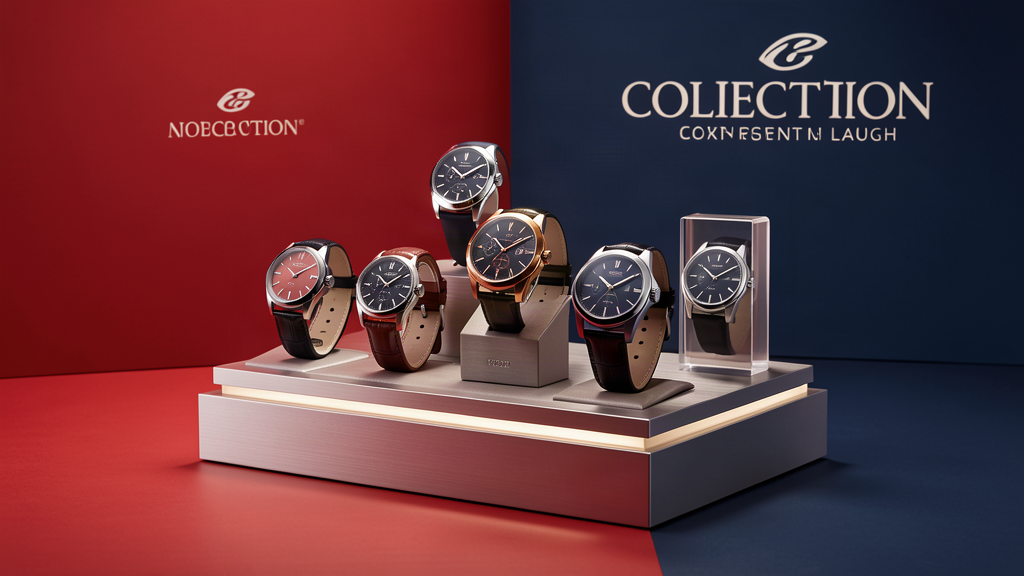
Understanding Why Customers Naturally Accept Watches as Part of a Brand
Of all brand extensions, watches are among the strongest. Every established brand eventually reaches a point where growth can no longer rely on expanding the same product range.
In our experience helping brands evaluate watches as a brand extension, the category consistently outperforms other branded merchandise because it is worn daily, lasts for years, and carries brand identity on the body rather than on a shelf. A first collection that stays to a small, considered range, with sampling priced per style, is a typical starting point.
The question shifts from “How do we sell more?” to “What should we create next?”
This is where brand extension begins.
For many companies evaluating a development partner, introducing a new product category like launching a watch collection represents more than an opportunity to generate additional revenue. Done thoughtfully, it allows a brand to deepen customer relationships, strengthen its identity, and remain relevant as customer expectations evolve. Done poorly, it can weaken years of carefully built trust by introducing products that feel disconnected from everything the brand previously stood for.
The difference rarely comes down to development quality.
It comes down to customer perception.
When customers encounter a new product from a brand they already know, they make an almost instant judgement.
Not about specifications.
Not about price.
Not even about quality.
Instead, they ask themselves a simple question:
“Does this feel like something this brand would naturally create?”
If the answer is yes, acceptance happens surprisingly quickly.
If the answer is no, even an excellent product often struggles to find its place.
Among all possible product categories, watches occupy a remarkably unusual position.
Across fashion labels, jewellery brands, premium leather companies, lifestyle retailers, automotive brands, luxury hotels, universities, museums, sports organisations and licensed brands, watches have repeatedly proven to be one of the most successful category extensions.
That success is not accidental.
Nor is it driven simply by market demand.
It comes from the unique role watches play in both branding and human behaviour.
Unlike many accessories, a watch is worn every day.
It accompanies important moments.
It becomes part of personal identity.
Most importantly, it allows customers to express their relationship with a brand in a way few other products can.
This article explores why watches have become one of the strongest brand extensions available to established brands—and why customers so often accept them as though they had always belonged.
Successful Brand Extensions Begin With Meaning, Not Products
When discussing category expansion, businesses often begin with products.
Customers begin somewhere entirely different.
They begin with meaning.
Every interaction a customer has with a brand contributes to a mental picture of what that brand represents.
This picture is rarely created through advertising alone.
It develops gradually through experience.
The quality of previous purchases.
The consistency of visual identity.
The emotions associated with using the products.
The service they receive.
The stories they tell other people.
Together, these experiences create something far more valuable than brand recognition.
They create expectation.
Customers begin to understand what kind of decisions the brand is likely to make.
They develop confidence in its taste, its judgement, and its values.
Over time, the brand becomes predictable—not in a negative sense, but in a reassuring one.
People feel they know what to expect.
This predictability is one of the greatest assets any established brand possesses.
Because when a new product category is introduced, customers don’t evaluate it in isolation.
They compare it against everything they already believe about the brand.
Imagine a premium outdoor company introducing technical hiking boots.
Most customers would consider that entirely logical.
The product extends the existing brand story.
Now imagine the same company launching luxury office furniture.
Even if the furniture is beautifully designed, customers are likely to pause.
Not because the furniture is poor.
But because it doesn’t seem connected to the brand they know.
This illustrates one of the most important principles of successful brand extension:
Customers don’t ask whether a product is good.
They ask whether it belongs.
When the answer feels obvious, marketing becomes easier.
When the answer feels uncertain, even outstanding products require significant effort to justify their existence.
This is precisely where watches become so interesting.
Unlike many other categories, watches already occupy a place that customers naturally associate with personal style, lifestyle, identity, and everyday use.
For the right brand, the leap is surprisingly small.
Why Watches Occupy a Unique Position Among Brand Extensions
Watches are worn daily and kept for years — among product categories, few offer the same sustained brand exposure per item, which is why brands measure watch collections in decades, not seasons.
Every product has a role.
Some solve problems.
Some create convenience.
Some entertain.
Some simply exist to satisfy temporary needs.
Watches are different.
Although their practical function has changed dramatically since smartphones became part of everyday life, their emotional function has become even stronger.
People no longer wear watches primarily because they need to know the time.
They wear them because of what the watch represents.
A watch reflects personal taste.
It signals lifestyle.
It becomes associated with milestones.
It often carries emotional value that grows over time rather than diminishing.
Few consumer products enjoy this combination of characteristics.
Consider how people describe a favourite watch.
They rarely begin with the movement.
They seldom mention the case diameter.
Instead, they tell stories.
They remember who gave it to them.
They remember the occasion.
The promotion.
The graduation.
The anniversary.
The journey.
The person.
In other words, the object becomes inseparable from memory.
This creates something exceptionally valuable for brands.
A successful watch collection doesn’t simply introduce another product into someone’s life.
It becomes part of moments that customers continue remembering for years.
Very few product categories enjoy this level of emotional longevity.
For lifestyle brands, this creates an opportunity that extends well beyond retail.
A watch allows customers to carry the brand with them every day.
Not just physically.
Emotionally.
Watches Strengthen Relationships Rather Than Replace Products
One of the biggest misconceptions surrounding brand extension is the belief that every new product category must generate entirely new customers.
In reality, the strongest brand extensions often achieve something different.
They deepen relationships with customers who already exist.
Someone who purchases jewellery from a brand isn’t simply buying precious materials.
They’re expressing personal style.
Someone investing in premium leather accessories isn’t only purchasing craftsmanship.
They’re buying products they expect to use for years.
The same principle applies to watches.
Rather than replacing existing products, a watch complements them.
It becomes another expression of the same design philosophy.
The same values.
The same attention to detail.
The same emotional connection.
This explains why customers often accept watches from brands that have never manufactured watches before.
They aren’t buying decades of horological heritage.
They’re buying another piece of a brand identity they already trust.
The watch doesn’t need to reinvent the brand.
It simply needs to continue the conversation that previous products have already started.
That is what separates successful brand extensions from opportunistic product launches.
One strengthens a relationship.
The other simply increases a catalogue.
The Five Drivers of Watch Category Acceptance
Why Customers Naturally Accept Watches From Brands They Already Trust
Every successful watch collection begins long before the first sketch is drawn or the first prototype is produced.
It begins in the customer’s mind.
By the time a brand announces its first watch collection, customers have already formed an opinion about whether the product belongs.
That judgement happens almost instinctively.
People rarely analyse it consciously.
Instead, they rely on everything they already know about the brand.
Over the years, we’ve noticed that customers consistently accept watch collections when five conditions are present.
These conditions have little to do with development expertise.
Instead, they explain why watches feel like a natural extension for some brands while feeling forced for others.
Together, they form what we call the the five drivers of watch category acceptance.
1. Daily Presence Creates Daily Brand Connection
Most products enter a customer’s life only occasionally.
A travel bag may be used a few times each year.
A jacket might be worn only during certain seasons.
A decorative object may sit on a shelf without much interaction.
A watch is different.
For many people, putting on a watch is part of the same daily routine as picking up their phone, wallet or keys before leaving home.
That seemingly ordinary habit has an extraordinary effect on branding.
Every time someone checks the time, adjusts the strap or catches a glimpse of the dial during the day, they experience another small interaction with the brand.
These interactions are subtle.
They aren’t advertisements.
They don’t ask for attention.
Yet they happen repeatedly, often hundreds of times each week.
Few consumer products enjoy this level of visibility.
This continuous presence gradually strengthens familiarity.
Over time, the watch stops feeling like a product.
It becomes part of the customer’s everyday life.
For brands, this creates something incredibly valuable.
Instead of appearing only when customers visit a website or walk into a store, the brand becomes part of their daily routine.
Very few product categories offer that opportunity.
2. Watches Express Identity Rather Than Utility
Many products are purchased because they solve practical problems.
A charger powers a device.
A suitcase carries belongings.
A notebook stores information.
People rarely see these products as reflections of who they are.
A watch occupies a different place in consumer psychology.
Long before someone notices the movement inside a case, they notice what the watch communicates.
Its proportions.
Its materials.
Its colours.
Its level of restraint—or boldness.
Each design decision contributes to a personal statement.
That is why customers often choose watches that align with their own values as much as their wardrobe.
Minimalist brands attract customers who appreciate simplicity.
Adventure brands attract people who identify with exploration.
Luxury brands appeal to those seeking refinement and craftsmanship.
The watch becomes an extension of both the wearer and the brand.
For lifestyle companies, this creates remarkable alignment.
Customers are not simply buying another accessory.
They are choosing another way to express the relationship they already have with the brand.
3. Watches Become Part of Life’s Important Moments
Few consumer products remain with someone long enough to accumulate memories.
Most products are replaced.
Updated.
Forgotten.
A watch often follows a different path.
It is given to celebrate graduations.
Presented after years of service.
Purchased to mark a personal achievement.
Inherited from one generation to the next.
Worn during weddings.
Taken on significant journeys.
Its value often increases emotionally rather than commercially.
People remember the story attached to the watch long after they forget its specifications.
For brands, this emotional longevity is incredibly powerful.
When customers choose a watch from a brand they trust, they are inviting that brand into meaningful chapters of their lives.
That relationship extends far beyond the original purchase.
It becomes part of memory itself.
This is one reason why successful watch collections often generate stronger customer loyalty than many other product categories.
The watch continues telling the brand’s story long after the transaction has ended.
4. Watches Fit Naturally Within Lifestyle Ecosystems
Some category extensions require customers to rethink what a brand represents.
Watches rarely do.
Consider the products many lifestyle brands already offer.
Jewellery.
Leather goods.
Apparel.
Eyewear.
Travel accessories.
Home objects.
Each contributes to a broader picture of how customers live rather than solving one isolated problem.
A watch complements this ecosystem naturally.
It shares many of the same characteristics.
It is personal.
Visible.
Design-led.
Long-lasting.
Frequently gifted.
Used every day.
Rather than introducing a completely new idea, a watch often completes an existing collection.
Customers instinctively understand where it belongs.
This explains why watches have become successful across such diverse industries.
Fashion labels.
Jewellery brands.
Luxury hotels.
Sports organisations.
Museums.
Universities.
Automotive brands.
Licensed entertainment properties.
The products may differ enormously.
The underlying customer relationship does not.
Each already represents a lifestyle customers identify with.
The watch simply becomes another expression of that identity.
5. A Watch Reinforces the Brand Every Time It Is Worn
Perhaps the most important characteristic of all is consistency.
Successful brand extensions do not replace a brand’s identity.
They reinforce it.
Every time someone wears a thoughtfully designed watch, the brand’s design language is experienced again.
Its proportions.
Its typography.
Its materials.
Its colours.
Its philosophy.
The watch quietly reminds customers why they chose the brand in the first place.
This effect is cumulative.
Over months and years, the watch becomes one of the strongest physical representations of the brand itself.
That is why successful watch collections rarely chase trends.
They focus instead on expressing the brand’s identity with clarity and consistency.
Because trends disappear.
Brand recognition grows.
Why These Five Drivers Matter More Than development Experience
Many brands hesitate to explore watches because they believe success depends primarily on watchmaking expertise.
Technical knowledge is undoubtedly important.
Reliable development matters.
Quality control matters.
Material selection matters.
But these are only part of the equation.
Customers rarely purchase a watch because they have studied its development process.
They purchase it because they believe in the brand behind it.
A beautifully engineered watch that feels disconnected from a brand’s identity will always struggle to create lasting emotional value.
Conversely, a thoughtfully designed watch that genuinely reflects a brand’s character often becomes one of the strongest expressions of that brand.
This is why successful watch collections almost always begin with branding rather than engineering.
The question isn’t:
“Can we manufacture a watch?”
The better question is:
“Can we create a watch that customers immediately recognise as unmistakably ours?”
That shift in thinking changes every decision that follows—from design direction and material selection to packaging, storytelling, and the overall customer experience.
Frequently Asked Questions
Because a watch is worn daily, kept for years, and noticed up close — few product categories offer the same sustained brand exposure per item. It builds on trust a brand already has rather than asking customers to rethink what the brand stands for.
Extensions fail when the new product exists commercially but not logically — customers can’t explain how it fits the brand’s story. With watches, the failure is almost never technical quality; it’s a disconnect between the watch and what customers expect from the brand.
Brands with a clear, consistent identity and genuine customer trust. If customers already buy across multiple categories and identify with the brand’s aesthetic, a watch becomes a natural next step. Brands still building that foundation are better off waiting.
Ready to explore what a watch line could look like for your brand? Start a conversation — we’ll be straightforward about fit and next steps.
Sources: Brand extension concept reference; Federation of the Swiss Watch Industry industry data.