
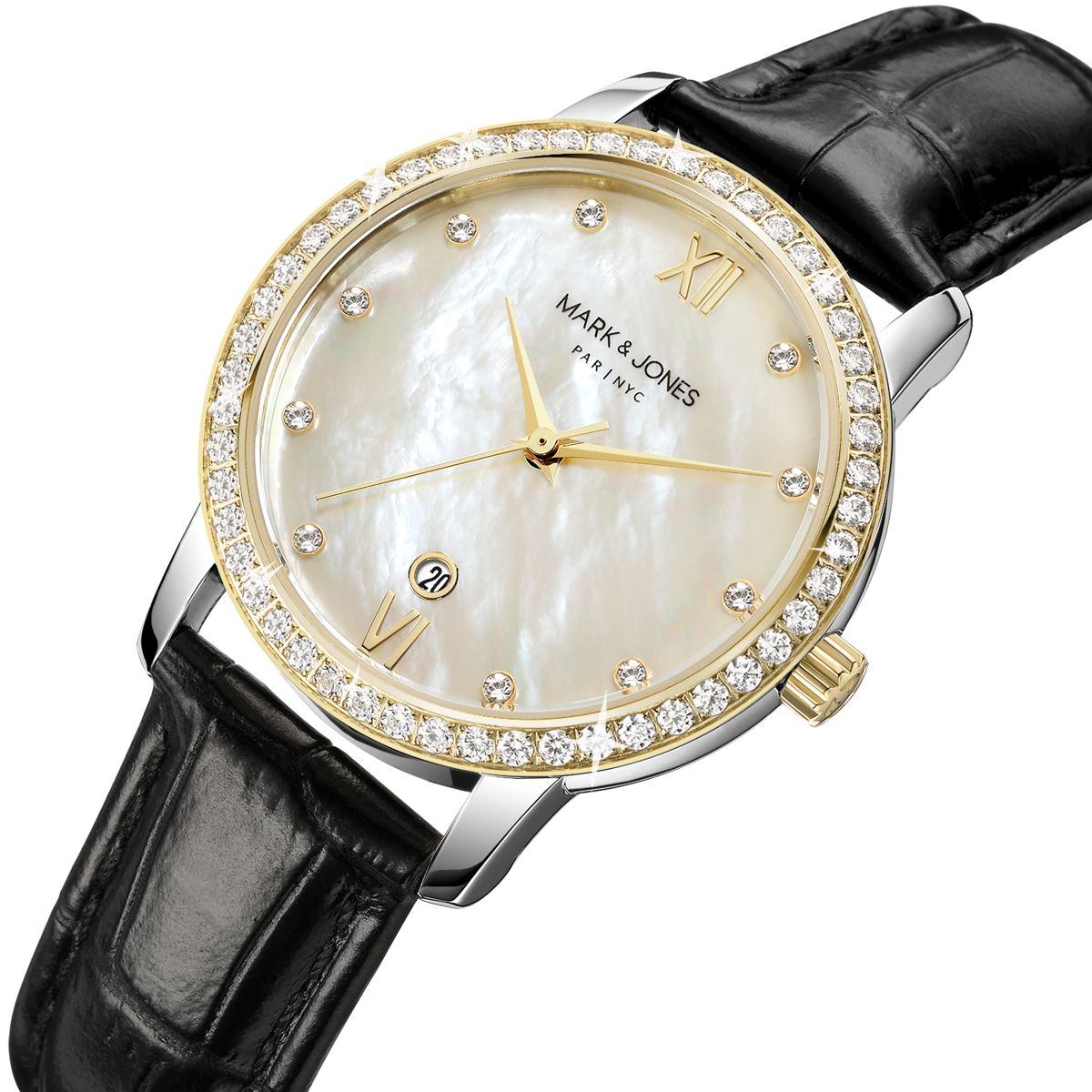
An anniversary watch has become a preferred way for established organisations to mark a corporate milestone because, unlike most commemorative objects, it is worn daily, carries the brand’s identity on the body rather than on a shelf, and gives employees, partners and clients a tangible, ongoing reason to recognise the brand. A well-developed anniversary watch does more than note a date — it becomes a piece of brand heritage that continues working long after the milestone year has passed.
In 13 years of helping brands develop watch collections, we’ve seen anniversary watches evolve from a nice-to-have to a strategic brand decision. The shift happened when companies realized that a watch is the one corporate gift that employees actually wear — not store in a drawer.
We’ve observed this shift closely across the corporate brand projects we’ve supported. A decade ago, a milestone year typically meant a commissioned book, a branded gift set, or an internal event. Today, more marketing and brand directors are asking a different question: not “what should we give people this year,” but “what object could represent our brand’s history in a way people will actually keep.” Increasingly, the answer is a watch.
This article goes deeper into that specific decision. For the broader context — how corporate brands approach the milestone-to-collection process from the very beginning — see our guide to corporate brand watch collections, which lays out the full framework this article builds on.
Why a Watch Marks a Milestone Differently Than Other Commemorative Objects
A watch is worn, not displayed — which means it stays in circulation as a daily reminder of the brand long after the anniversary event itself is over.
A recent project: a company marked a 10th anniversary with a quartz model featuring their founding year on the case back, produced in a modest batch for long-tenured employees — a milestone gift the recipients still wear years later.
Most commemorative objects have a short active life. A plaque is mounted once and rarely looked at again. A branded gift is used a handful of times, if at all. Even a well-produced anniversary publication tends to be read once and shelved. A watch behaves differently. It is worn on the body, seen throughout the day, and — critically — chosen by the wearer to keep wearing. That ongoing, voluntary use is what separates a genuine piece of brand recognition from a one-time token.
There is also a symbolic alignment that other objects don’t share. A watch measures time. An anniversary marks time. For an organisation marking ten, twenty-five, fifty or a hundred years, a timepiece is one of the very few commemorative categories where the object’s function and the occasion’s meaning are the same thing. This is part of why we consider the anniversary watch category distinct from general corporate gifting — it isn’t a gift chosen to represent the brand; it’s an object whose purpose already does.
Finally, a watch carries status in a way few commemorative objects can. Recipients — whether employees, dealers, or long-standing clients — tend to associate a well-made watch with genuine recognition rather than routine appreciation. That perception matters more at senior levels of an organisation, where the audience receiving the milestone piece often expects the presentation to reflect the significance of the occasion.
What Makes an Anniversary Watch Feel Authentic, Not a Generic Trinket
An anniversary watch reads as authentic when the brand’s actual identity — not just its name and a date — is visibly present in the design; it reads as a trinket when the watch is simply a blank timepiece with an engraved year.
This is the distinction we return to most often with brand and marketing directors early in a milestone project. It is tempting to treat the watch as a vessel: choose a case, add the logo, engrave the founding year, done. But recipients can tell the difference between a watch that happens to carry a brand’s name and a watch that was clearly designed around that brand’s identity.
Translating Brand History Into Design
Converting a brand’s existing visual language — colour, material cues, typography, proportion, signature details — into watch design decisions is especially relevant for anniversary pieces, because the milestone context gives the brand’s history more design material to draw on than a standard collection launch would.
For many established brands, an anniversary is an opportunity to look back at the visual language the organisation has actually used across its history — an early logotype, a signature colour introduced decades ago, a material associated with the founding era — and translate one or two of those elements into the watch, rather than defaulting to the brand’s current visual identity alone. Across the brand projects we’ve supported, the anniversary pieces that generated the strongest internal response were the ones that referenced something specific to the organisation’s own history, not generic markers of “premium” design.
Checking Whether the Design Actually Reads as the Brand
Before finalising an anniversary watch design, it’s worth asking a simple question: if someone saw this watch without the brand’s name visible anywhere on it, would they still be able to identify which brand it belongs to? An anniversary watch that fails this test — one that would look at home under any brand’s name — usually signals that the design leaned on the date and the logo rather than on the brand’s actual identity.
One Commemorative Piece or the Start of an Ongoing Collection
Before development begins, an anniversary project needs a clear decision on scope: is this a single commemorative piece produced once for the milestone year, or the first release in what becomes an ongoing part of the brand’s product presence?
This decision matters more than most organisations initially expect, because it changes what “success” means for the project. A single commemorative piece is judged by how well it captures a moment. An ongoing collection is judged by how well the first release sets up the releases that follow.
When a single commemorative piece is the right scope
For many organisations, a milestone anniversary is a bounded moment — internal recognition, a limited distribution to employees or top-tier partners, and a clear end point once the anniversary year closes. In this case, the watch functions closer to a corporate artifact than a retail product, and the design brief can lean fully into the specific milestone (the founding year, an anniversary numeral, a limited internal presentation) without needing to anticipate future releases.
When the anniversary becomes the opening chapter of a collection
For other organisations — particularly those with a retail-facing brand, a licensing arm, or an active merchandising program — the anniversary watch turns out to be the natural entry point into an ongoing watch category. Rather than launching a full range at once, a brand introduces one well-considered piece, observes how it’s received internally and externally, and expands deliberately from there. An anniversary provides a distinct, well-timed reason to introduce that first piece rather than launching into an unstructured product decision later.
We’d encourage any brand director weighing this choice to make the decision explicitly, in writing, before development begins — not to discover it midway through the project. A watch designed as a one-off commemorative piece and a watch designed as the first entry in a collection are approached differently from the earliest design conversations, including how much the milestone-specific details (like an anniversary year on the dial) dominate the design versus sit as a subtler reference. Our guide on when a single watch becomes a full collection walks through this decision in more depth, and our collection development resource outlines what a first release should account for structurally if a collection is the eventual goal.
How to Think About Timing an Anniversary Watch Program
An anniversary watch program works backward from a fixed date, which means the planning window is usually longer than organisations expect once brand approval stages are accounted for.
Because a milestone date doesn’t move, an anniversary watch is one of the few brand projects where the deadline is set before the project begins. That has real implications for how early planning should start. Design translation, internal brand approvals, sampling and refinement, and any internal distribution or event planning all need to happen inside a fixed window — and each of those stages typically takes longer inside a larger organisation than a single decision-maker brand, simply because more stakeholders are reviewing the design at each step.
We’d generally advise brand and marketing directors to begin the anniversary watch conversation twelve months ahead of the milestone date wherever possible, and to treat anything under six months as a genuinely compressed timeline. Our watch collection development timeline breaks down what each development stage typically involves, which is useful context for anyone mapping a milestone date backward into a working project schedule.
A Genuine Trade-off Worth Acknowledging
It’s worth being direct about a real trade-off here: milestone-driven timelines leave less room for iteration than an open-ended collection project would.
A standard collection launch, without a fixed deadline, allows for more rounds of design refinement and more flexibility if early samples don’t land as intended. An anniversary watch, by contrast, is tied to a date that can’t shift. That constraint isn’t a reason to avoid the category — it’s simply a reason to start earlier, involve brand stakeholders sooner, and be more decisive at each review stage than a typical collection project might require. Organisations that plan for this trade-off from the outset tend to have a smoother development process than those that treat the anniversary timeline as flexible until it suddenly isn’t.
Frequently Asked Questions
How far in advance should a brand start planning an anniversary watch?
Twelve months ahead of the milestone date is a reasonable starting point for most established organisations, particularly where multiple internal stakeholders need to review and approve the design. Shorter timelines are possible but leave less room for refinement.
Does an anniversary watch need to be produced only once?
No. Many organisations produce a single commemorative release tied specifically to the milestone year, while others use the anniversary as the deliberate first release in an ongoing watch collection. The right approach depends on whether the brand has a retail or merchandising presence the collection could support going forward.
How is an anniversary watch different from a standard corporate gift?
A corporate gift is typically chosen to represent appreciation in the moment. An anniversary watch is designed around the brand’s own identity and history, worn continuously rather than used once, and — when developed well — functions as a piece of brand heritage rather than a one-time token.
Should the anniversary date appear prominently on the watch?
That depends on the scope decision. A single commemorative piece often benefits from a clear, visible reference to the milestone year. A watch intended as the opening piece of an ongoing collection usually treats the date more subtly, so the design continues to feel relevant well after the anniversary year has passed.
Ready to explore a watch line for your brand? Start a Conversation with the HTIMES team about your organisation’s upcoming milestone.
In our experience helping organisations develop anniversary watch collections, the brands that get the most value from these projects are the ones that brief the development team the same way they would brief an advertising agency — with a clear brand narrative, a milestone date, and the understanding that the watch will outlast the anniversary campaign itself.
An anniversary watch is developed as a piece of brand heritage, not a catalogue item. It carries the brand’s founding year, colour system, and identity on a product worn daily for years, whereas a typical corporate gift is a branded item ordered from an existing supplier without custom design or development.
The right number depends on who the collection is for — a small executive tier, a broader distribution to all employees, or both — and how many dial variations you want to mark different tiers of the celebration. Most anniversary programs settle on a modest, considered scope rather than a wide range, which keeps quality consistent across every piece.
Yes. Many organisations develop an anniversary collection that serves dual purposes: a fixed allocation for employees and partners, plus a limited retail run for customers or alumni. The development process is the same; the distribution strategy is decided before delivery begins.
Sources: Brand extension (Wikipedia) – Federation of the Swiss Watch Industry