
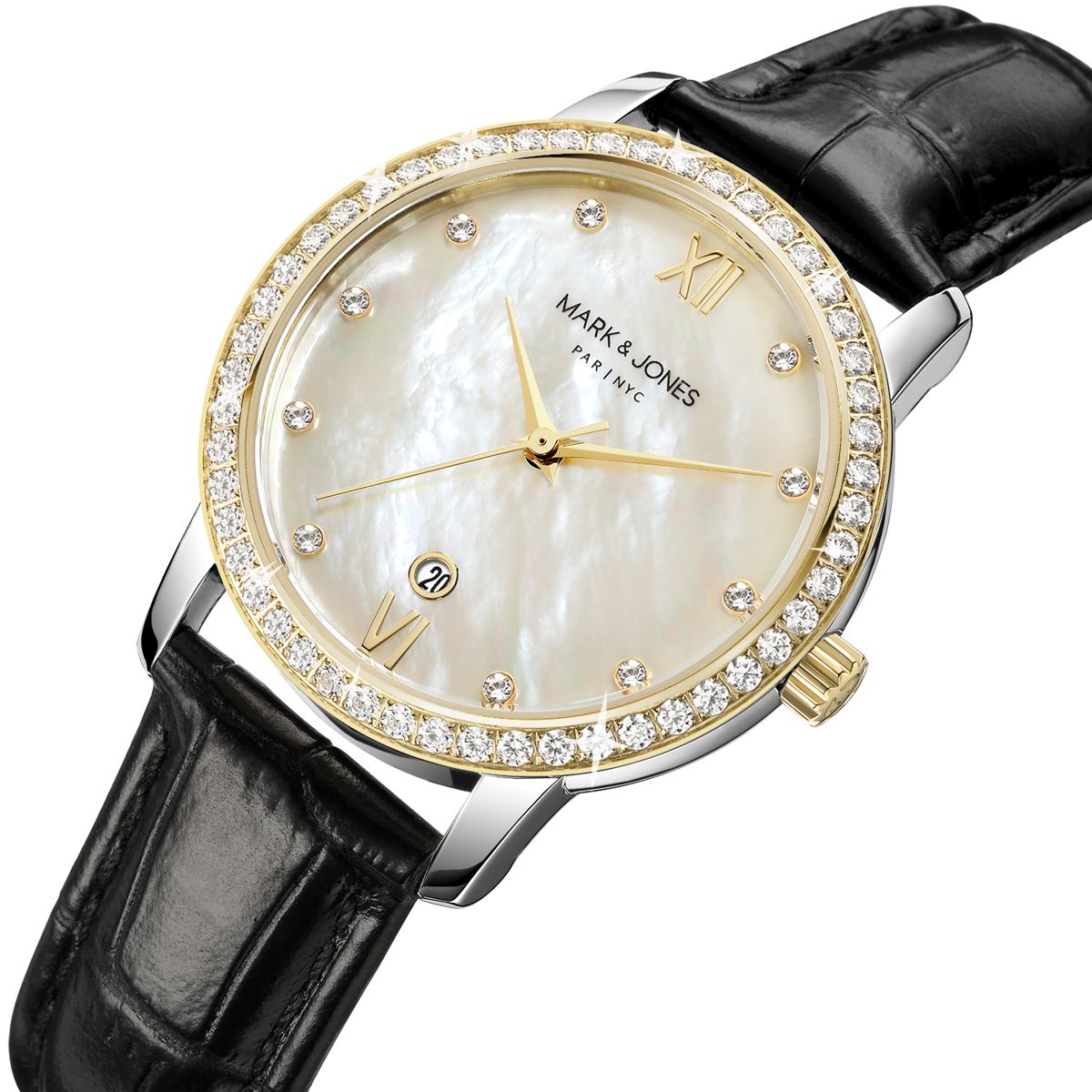
Executive gifting became a brand extension strategy the moment corporate brands stopped asking “what can we hand someone at a milestone” and started asking “what object could carry our identity for the next twenty years.” That shift — from a purchasing decision to a brand decision — is what separates a watch collection built for recognition from a branded item ordered off a catalogue. This article looks at why that shift is happening, what makes a recognition object actually work as a piece of brand identity, and how a program can begin with a single tier and grow into something larger over time.
We’ve seen the evolution firsthand: executive gifting moved from branded pens and notebooks to watches when companies realized that a watch is the one gift an executive will actually wear to meetings. In our experience, the brands that get this right treat the gifting watch as a brand extension project — with the same design discipline as any product in their portfolio.
We covered the broader context for this shift in How Corporate Brands Turn Milestones Into Watch Collections, which looks at anniversary programs, long-service recognition, and brand heritage more generally. This article goes deeper into one specific application: executive, employee, and partner recognition — and why it deserves more strategic weight than most organisations currently give it.
From a Purchasing Line Item to a Brand Decision
Summary: Recognition programs are increasingly treated as brand touchpoints rather than procurement categories, and that reframing changes who owns the decision and what “success” looks like.
For a recent client, a small batch of executive watches — automatic movement, branded dial, premium packaging — created dozens of walking brand impressions that last years, not days.
For many years, executive recognition sat inside procurement or HR administration — a line item to be filled efficiently, with the object itself treated as incidental to the moment. We’ve observed a change in how brand and marketing leadership think about this. When a recognition program touches the people who represent an organisation most directly — its executives, its long-serving employees, its dealer or partner network — the object handed to them is not incidental. It is one of the more intimate expressions of the brand that exists, because it is worn, kept, and seen daily by someone the recipient trusts.
This is precisely the territory our broader guide to corporate brand watch collections covers — the idea that a brand’s identity can extend beyond its core products into new categories, provided the extension is developed with the same discipline as the original brand. A recognition watch collection is one of the clearest applications of that thinking, because unlike most branded items, a watch is functional, personal, and long-lived in a way few other objects are.
What Separates a Recognition Object From Generic Branded Merchandise
Summary: The difference is not price or material — it is whether the object reflects deliberate brand thinking or is simply stamped with a logo.
This is where many recognition programs fall short, and it is rarely a question of how much was invested. A pen, a portfolio, a desk accessory — these can be well made and still feel disconnected from the brand they represent, because the design process behind them was never really about the brand. It was about finding a category of item and applying a logo to it.
A watch collection developed with brand intent works differently. The case proportions, the dial layout, the material palette, the way the brand’s visual language is translated into a small, three-dimensional object worn on the wrist — all of these are design decisions, not decoration decisions. We focus on converting a brand’s existing visual identity — colour, typography, material language, brand story — into the physical language of a watch, specifically so the result reads as an extension of the brand rather than a licensed accessory bearing its name.
One useful check across the recognition programs we support is a simple question: if you removed the visible logo, would the object still be identifiable as belonging to this brand, through its proportions, colour language, and material choices alone? Recognition objects that pass this test tend to be kept, worn, and talked about years after they are received. Objects that fail it tend to be logo-dependent, and logo-dependent items age quickly as branding evolves.
Why a Watch Collection Reads Differently at the Moment of Recognition
Summary: A watch is worn continuously and seen socially, which gives it a different relationship to identity and memory than most recognition items.
A watch occupies an unusual position among objects a brand might use for recognition. It is functional enough to be used daily, personal enough to be chosen and worn by preference, and visible enough to be noticed by colleagues, clients, and family over years, not weeks. A desk item stays on a desk. A watch travels with the person who receives it — into meetings, onto stages, into the everyday moments where a brand’s presence quietly compounds.
Across the corporate brand projects we’ve supported, this has come up consistently in conversations with marketing and HR leadership: the recipients of long-service or partner-tier recognition remember the moment far more clearly when the object itself carries weight. A financial institution building a long-service program, for example, is not simply trying to mark a tenure milestone — it is trying to reinforce, in a tangible way, that the institution’s identity and the employee’s personal milestone are now connected. A dealer network for an automotive brand recognising its top-performing partners is doing something similar: using the object to reinforce that the dealer’s success and the brand’s identity are aligned. In both cases, the object is doing brand work, not just ceremonial work.
Starting Small and Expanding Deliberately
Summary: A recognition-driven watch collection rarely needs to launch fully formed — it can begin with one tier and expand as the program proves its value internally.
One of the more common concerns we hear from brand and HR leadership is that building “a collection” sounds like a much larger commitment than a recognition program can justify on day one. This is a reasonable concern, which is why a structured approach — launching a single, well-considered recognition tier first, and expanding the collection in later phases once the program’s value is demonstrated internally — tends to work better than committing to a full range up front.
In practice, this often means starting with the highest tier of recognition — a milestone anniversary, an executive-level achievement, a top-performing partner category — and developing one design that reflects the brand with genuine care. Once that tier is established and its reception understood, additional tiers can be introduced: a design language for long-service recognition at earlier milestones, a distinct piece for partner or dealer recognition, a variant reserved for founding-era or leadership-level distinction. Over several years, what began as a single object becomes a structured collection with its own internal hierarchy — each tier legible against the others, all of it recognisably part of the same brand.
This staged approach also gives brand and HR teams room to evaluate fit before expanding scope, which tends to build far more internal confidence than committing to a full multi-tier program before a single piece has been worn and reacted to.
A Genuine Consideration: This Is a Longer Runway Than a Generic Item
Summary: Developing a recognition object with real brand identity takes longer and involves more design collaboration than sourcing a generic branded item — and that trade-off is worth naming honestly.
It would be misleading to suggest that a brand-first recognition watch is a simple substitute for an off-the-shelf item. It is not. Translating a brand’s identity into a considered design takes real collaboration — reviewing the brand’s visual language, developing concepts, refining proportions and materials, and testing how the design holds up in the hand and on the wrist, not just on screen. Organisations planning a recognition milestone on a fixed date should build this development runway into their planning rather than treating it as something that can be finalised at the last moment.
We view this not as a drawback but as the reason the outcome is different. A generic item can be sourced quickly precisely because no brand-specific decisions are being made. A recognition object built to represent an organisation’s identity requires those decisions to be made well, and that takes time. For programs tied to a fixed date — an anniversary year, an annual recognition event — the practical implication is simple: begin the conversation with a development partner earlier than the sourcing timeline for a generic item would suggest.
Choosing a Partner for This Kind of Program
Summary: Because the object is meant to represent the brand for years, the partner developing it matters as much as the design itself.
A recognition watch collection is a long-term brand asset, which makes the choice of development partner a meaningful decision in its own right — not simply a sourcing decision. We’ve written in more depth about what to look for in how to evaluate a watch development partner, but the short version is this: the right partner treats the brand’s identity as the starting point of the process, not a set of specifications applied after the fact. If a program is likely to grow into a multi-tier structure over time, it is also worth asking early whether your brand should be building a full watch collection strategy rather than a single one-off piece — the answer shapes how the first tier should be designed from the outset.
Frequently Asked Questions
Is a watch collection more appropriate than traditional executive recognition items?
For organisations that want the recognition moment to reinforce brand identity rather than simply mark an occasion, a watch collection tends to serve that purpose more effectively than generic branded items, because it is worn and seen continuously rather than used once and set aside. Whether it is the right choice for a specific program depends on the organisation’s recognition tiers, timeline, and how central brand identity is to the moment.
Can a recognition watch program start with just one tier?
Yes. Most programs we support begin with a single, well-developed tier and expand into additional tiers over subsequent phases as the program proves its value internally.
How is this different from ordering branded watches with a logo?
The distinction is in the process, not the product category. A recognition piece developed through a genuine Brand Translation process reflects the brand’s colour language, proportions, and material choices as design decisions — it would still read as belonging to the brand even without the logo applied. An item with a logo simply printed onto a generic design does not carry that same brand ownership.
How far in advance should a corporate brand start planning this?
Because developing a brand-first design involves real collaboration — reviewing brand identity, refining concepts, and validating the result — organisations working toward a fixed recognition date should begin the conversation well ahead of the timeline they would use for a generic branded item. Starting early gives the design process the room it needs to reflect the brand properly.
If your organisation is exploring how a recognition program could become a genuine extension of your brand, we’d welcome the conversation. Start a Conversation with the HTIMES team, or Explore the Collection approach we’ve developed for corporate brands.
Ready to explore a watch line for your brand?
For context, a typical executive gifting project scales from a small leadership tier to broader distribution, with development time of 4-6 weeks including sampling and assembly.
Budget depends primarily on movement type, dial customization, and packaging — quartz models are the more accessible entry point, while automatic movements carry a premium reflecting the mechanism. Most programs keep the collection focused with one or two references rather than a wide range, which keeps quality consistent and cost predictable.
An executive gifting watch works when it carries the brand’s visual identity — colour, logo treatment, typography — onto a product that is worn daily, not displayed once and shelved. The dial and case back are the primary surfaces for brand identity; packaging is secondary but should match corporate standards.
Yes. Many programs begin with a single tier for senior leadership, then expand to broader distribution once the design language is established. A quartz model is a common entry point, with room to scale up in movement type and distribution as the program proves its value.
Sources: Brand extension (Wikipedia) – Federation of the Swiss Watch Industry